Educational content on VJDementia is intended for healthcare professionals only. By visiting this website and accessing this information you confirm that you are a healthcare professional.

Share this video  

AD/PD 2022 | Inhibition of CXCR4/CXCL12 signaling: a translational perspective for Alzheimer’s disease treatment

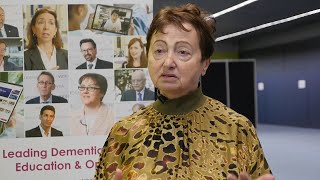
Beka Solomon, PhD, Tel Aviv University, Tev Aviv, Israel, discusses the inhibition of CXCR4/CXCL12 signaling as a potential novel target in Alzheimer’s disease. Prof. Solomon has worked for many years in immunotherapy, and 20 years ago, her lab was the first to demonstrate that antibodies can target a specific region of amyloid-β- peptides that can prevent aggregation and dissolve already formed aggregates. Prof. Solomon now works with treating neuroinflammation due to its prevalence in all neurodegenerative diseases. The CXCR4/CXCL12 axis is one of the major signal transduction cascades involved in the inflammation process and homing of hematopoietic stem cells (HSCs) within the bone marrow niche. Using a transgenic and non-transgenic mouse model, they were treated with the AMD3100 inhibitor. Thus, it was found possible to upregulate a monocarboxylate receptor for lactate (MCT1) – suggesting that the combination of AMD3100 with lactate is more effective than individual treatment. Prof. Solomon further explains that through this new stem-cell therapy, there is a possibility of reducing pathology and improving cognitive function – as demonstrated in the mouse models. This interview took place at the AD/PD™ 2022 Conference in Barcelona, Spain.

Choose your cookie settings

VJDementia uses necessary cookies to make the site work. With your permission we'd also like to use analytics, preference and marketing cookies to understand how the site is used and improve it.

Choose an option to continue. You can change it at any time on our Cookie Policy page, linked at the bottom of every page.