Educational content on VJDementia is intended for healthcare professionals only. By visiting this website and accessing this information you confirm that you are a healthcare professional.

Share this video  

AD/PD 2022 | iPSC-derived 3D organoid models to explore Alzheimer’s disease

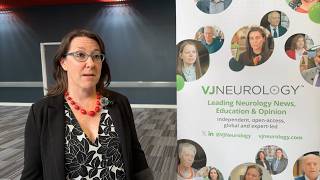
Silvia Di Angelantonio, PhD, Sapienza University of Rome, Rome, Italy, discusses using induced pluripotent stem cells (iPSCs) to explore neurodegeneration. iPSC-based organoids provide a unique technology for deepening our understanding of the neuron-glia-microglia interaction and crosstalk in both physiological and pathological conditions. Exploiting gene-editing technologies, such as CRISPR Cas9, to genetically engineer isogenic iPSCs with a panel of Alzheimer’s disease-relevant mutations allows for the impact of that mutation on a particular phenotype to be dissected. These mutations, including tau, impact neuronal formation, morphology, and also synaptic activity. Dr Di Angelantonio also discusses how moving from a 2D to a 3D system may improve our ability to find β-amyloid plaques. Human-derived brain organoids can be utilized as a model to study neurodevelopmental and neurodegenerative diseases. This interview took place at the AD/PD™ 2022 International Conference on Alzheimer’s and Parkinson’s Diseases hosted in Barcelona, Spain.

Disclosures

This research was funded by D-tails srl and CrestOptics SPA

Choose your cookie settings

VJDementia uses necessary cookies to make the site work. With your permission we'd also like to use analytics, preference and marketing cookies to understand how the site is used and improve it.

Choose an option to continue. You can change it at any time on our Cookie Policy page, linked at the bottom of every page.